Chelsea Already Sold the Air Above Some of Its Buildings
August 27, 2026
August 27, 2026
If you are underwriting a four-story building in West Chelsea because the zoning map shows a floor area ratio of 6.5 or 7.5, stop before you pencil in three more floors. The air above that building may already belong to someone else, sold years ago to a lot three or four blocks west, and no amount of renovation budget will bring it back.
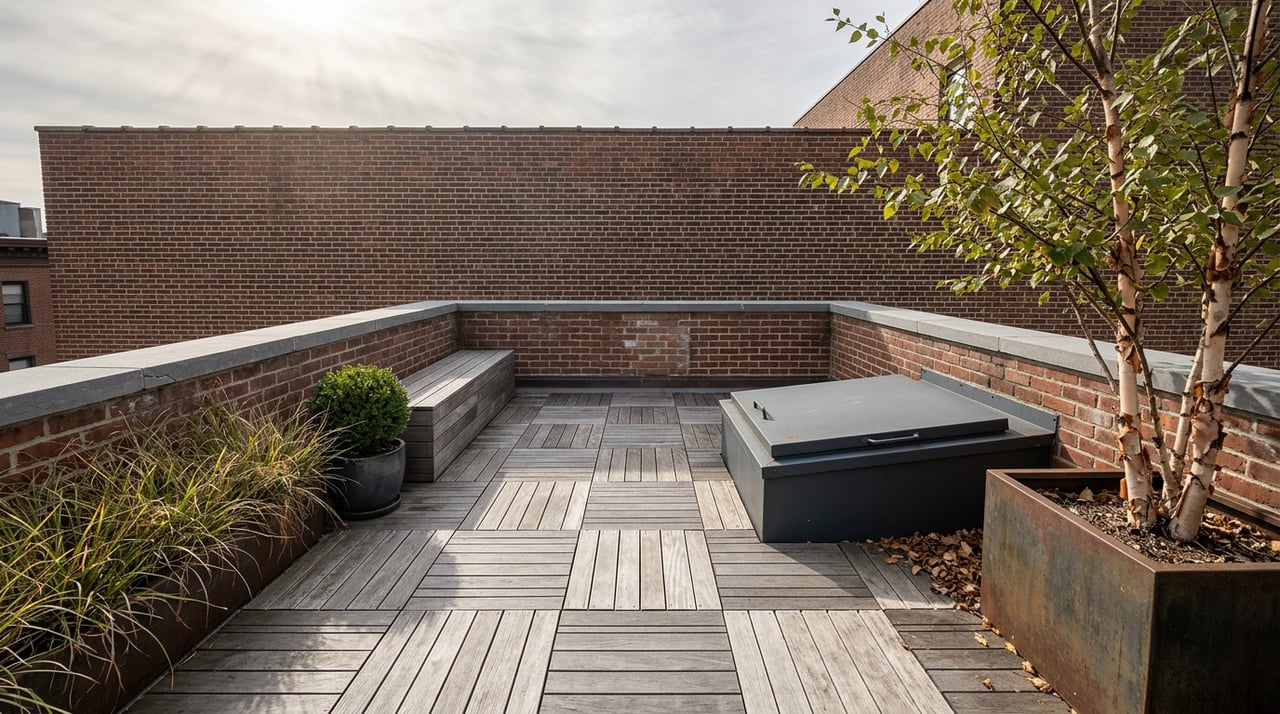
This is not a hypothetical. It is how a specific stretch of Manhattan, running roughly from West 16th to West 30th Streets between Tenth and Eleventh Avenues, ended up with the skyline it has today: a scattering of glassy new towers pressed up against Eleventh Avenue while squat four- and five-story buildings sit almost untouched closer to the High Line itself. Most buyers read that contrast as taste, or timing, or which owners happened to sell first. It is actually the visible output of a zoning trade the city built in 2005, and understanding it changes how you should evaluate almost any older building in the district.
Before 2005, most of West Chelsea was zoned M1-5, a light manufacturing designation that capped floor area at a modest ratio of 5 and did nothing to protect the abandoned elevated rail line running through it. The city wanted to turn that rail line into a park, but it also did not want to simply freeze every building underneath and beside it in place without compensation. So it created the Special West Chelsea District and, inside it, something called the High Line Transfer Corridor.
The mechanics are straightforward once you see them. Buildings within the corridor, the ones close enough to the elevated structure that adding height would block light, air, or the views the park was designed to offer, became what the zoning code calls granting sites. They could sell their unused development rights to receiving sites elsewhere in the district. The owner of a squat building next to the High Line gets paid for floor area they were never going to be allowed to build anyway. The owner of a lot farther from the park gets to build taller than the base zoning would otherwise permit. Construction on the park began in 2006, and the High Line opened to the public in 2009.
The bonus available through this transfer system depends on where a receiving site sits, and the tiers are worth knowing if you are comparing lots or trying to understand why one block reads so differently from the next.
| Zoning subdistrict | Base FAR | Maximum FAR achievable |
|---|---|---|
| C6-2 | 5 | 6, via the High Line Transfer Corridor |
| C6-3 | 5 | 7.5, via the High Line Transfer Corridor combined with an inclusionary housing bonus |
| C6-4 (West 28th to West 30th Street) | 6.5 | 9.15 via the High Line Transfer Corridor alone, up to 12 with inclusionary housing added |
The inclusionary housing piece matters too. To reach the top tier, a developer generally has to set aside a share of units as affordable, roughly 10 to 20 percent, either in the building itself or at a nearby site. Stack a High Line transfer purchase on top of an inclusionary bonus and a lot that started at a base FAR of 5 can end up building to 12. That is the difference between a mid-rise and a tower, and it is exactly why the bulk in West Chelsea skews west. Owners along the corridor sold their floors, and developers with lots closer to Eleventh Avenue bought them.
For most of the 2010s, these transfers were negotiated privately between granting and receiving property owners, and prices climbed as the supply of sellable air rights along the corridor shrank. By 2017, city planners realized that roughly 90 percent of the corridor's transferable floor area had already changed hands. That triggered a clause in the zoning text, sometimes called the 90 percent rule, that let the city itself step in as the seller of last resort. In 2018, the City Planning Commission set a price of $625 per buildable square foot, calculated as a weighted average of the prior five years of private transactions, with the proceeds directed to the West Chelsea Affordable Housing Fund for low- and moderate-income housing development.
More recent pricing has pushed higher still, with the most recent transactions reported near $800 per buildable square foot, well above what air rights fetch in most other parts of the city. That number is a real signal. It tells you what developers have been willing to pay simply for the right to build bigger next to a park that did not exist twenty years ago.
Here is the part that should change how you think about the district going forward. Because so much of the corridor's transferable floor area sold off during the 2010s development wave, most of what could be built through this specific mechanism has already been built. Future large-scale development in West Chelsea now depends much more on inclusionary housing bonuses generated elsewhere in the surrounding community district than on squeezing additional air rights out of buildings along the High Line itself. The supply of this particular kind of upside is running out.
That has a direct consequence for anyone evaluating an existing large residential building in the corridor. The towers already standing represent something close to the ceiling of what this zoning tool was ever going to produce at this scale. A closing this week illustrates the pricing that scarcity can support. A condo at One Highline, at 500 West 18th Street, developed by Witkoff and Access Industries, sold for $9.5 million, or $3,600 per square foot, in a deal reported by The Real Deal. The unit spans 2,600 square feet with three bedrooms and three and a half bathrooms, first listed by Corcoran's Steve Gold in 2023 with a most recent ask just under $10 million. One published 2026 market data roundup put the combined per-square-foot range for West Village townhouses and Chelsea High Line condos at $1,800 to $3,500. This closing landed above that band, which is consistent with a category of building that will not get much larger competing supply.
If you are a private investor or family office looking at a smaller building inside the transfer corridor as a potential value-add or development site, do not treat the zoning map's stated FAR as a promise. Ask whether the property has already transferred its development rights under the High Line Transfer Corridor. Those transfers require written notice to the Department of City Planning and a recorded distribution instrument spelling out how much floor area moved and where it went, and the transfer binds the property for as long as it stands, regardless of who owns it. A zoning-savvy architect or attorney can pull this history before you underwrite any expansion potential.
If you are an owner-occupant or first-time buyer drawn to a converted loft or walk-up near the park, the same fact can work in your favor. A building that cannot legally add height is a building whose light, low scale, and proximity to the High Line are effectively locked in. That permanence is part of what you are paying for, and it is not going to change because a neighbor decides to sell.
If you already own or are considering a unit in one of the district's newer towers, the finite nature of this mechanism is worth understanding as context for how that category of housing has been priced. It is not a guarantee of future appreciation, but it does mean the supply of directly comparable new product built the same way is limited.
Broader Chelsea resale numbers add a useful backdrop here. Over the three months ending April 2026, the median sale price in Chelsea was $1.9 million, up 12.4 percent from the same period a year earlier, while the median price per square foot fell 11.7 percent over that same window. Homes took an average of 144 days to sell, roughly double the 67 days recorded a year prior, and the number of homes sold in April 2026 fell to 112 from 151 the year before. A market where the median rises while the per-square-foot figure falls and days on market nearly doubles is a market where what is actually transacting matters more than the headline number, and building type inside a corridor like this one is a real part of that story.
How do I find out if a specific building has already sold its air rights? Transfers under the High Line Transfer Corridor require written notice to the Department of City Planning and a recorded distribution instrument. An attorney or a zoning-savvy architect can trace this history before you make an offer contingent on future development potential.
Does this only matter for people buying development sites? It matters most for anyone evaluating a smaller building for its expansion or redevelopment potential. For someone buying a finished condo or co-op unit to live in, the mechanism explains the surrounding streetscape more than it changes the transaction itself.
Will more towers get built along the High Line going forward? Not through this specific pathway in most cases. With the bulk of the corridor's transferable floor area already absorbed, new large-scale projects in the district are more likely to rely on inclusionary housing bonuses generated elsewhere rather than further transfers from buildings along the park.
Chelsea rewards buyers who look past the zoning map and into the paper trail underneath it. If you are weighing a purchase in the district, whether it is a small building with real or imagined upside, a unit in an existing tower, or something in between, Alva Property Advisors can help you separate what the zoning allows on paper from what a specific lot can actually still do. Schedule a Confidential Consultation to start with the numbers that matter for your property.
Stay up to date on the latest real estate trends.
At Alva Property Advisors, we're building a team of driven real estate professionals who are passionate about delivering exceptional results. Join our New York-based team and gain access to industry-leading support, innovative marketing, and opportunities for long-term growth.

THE ALVA PROPERTY ADVISORS TEAM
654 Madison Ave 5th Fl
New York NY 10065