Why Some Tribeca Lofts Are Still Filing Paperwork From 1982
September 10, 2026
September 10, 2026
A broker recounted the moment a $10 million Manhattan deal came apart over a single date on a piece of paper. The buyer's contract included a clause letting them walk if the building's temporary certificate of occupancy wasn't renewed by a set deadline. The renewal came through one day after that deadline had already passed, one day too late to stop the buyer from exercising the right to walk. The seller lost leverage in a softening market and had to renegotiate from a weaker position.
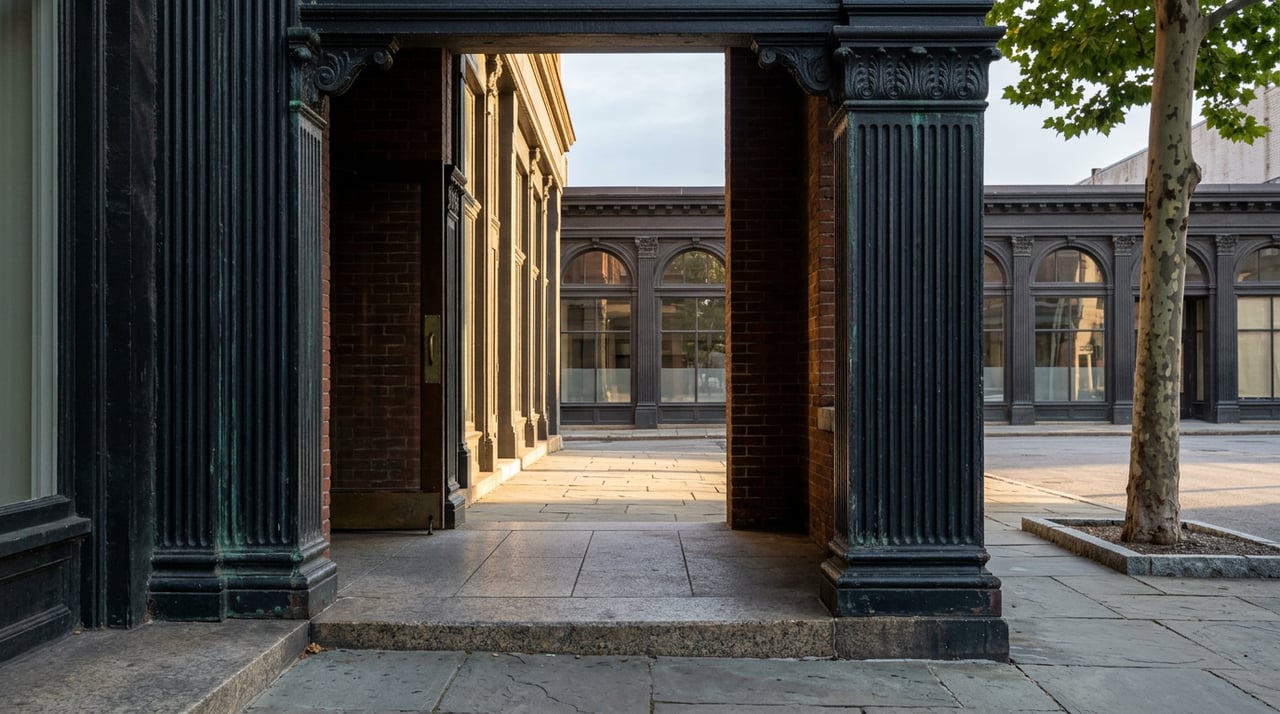
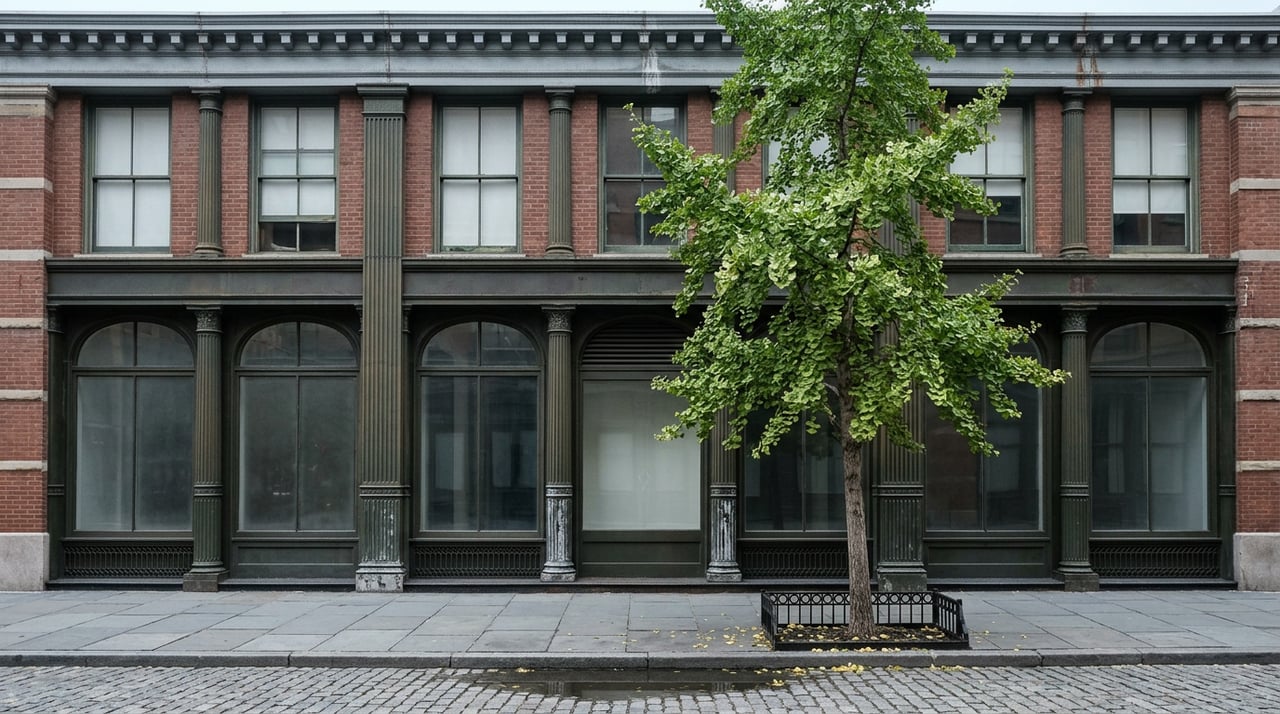
That story is about New York generally, but it describes a risk that concentrates in Tribeca more than almost anywhere else in Manhattan. This is a neighborhood built on 19th century warehouses, printing houses, and textile factories, most of which were never designed to be lived in. Decades after the first tenants moved in anyway, a meaningful share of that housing stock is still, in a legal sense, mid-conversion. The certificate of occupancy on a Tribeca loft is not always a closed file. Sometimes it is an active one, with its own deadlines, fees, and paperwork still coming due.
That distinction, open file versus closed file, is the thing worth understanding before you write an offer, because it changes what your attorney needs to pull and what your closing timeline can actually promise.
New York's 1961 zoning overhaul was one of the first in the country to separate uses into strict categories. Manufacturing districts were supposed to stay manufacturing. But by the 1970s, landlords in Tribeca and SoHo were letting tenants move into buildings zoned for industry because residential rents beat warehouse rents. The city's Department of City Planning eventually looked at what had actually happened and found that 91.5 percent of these loft conversions were illegal, and nearly half of the households living in them were headed by artists.
That mismatch between how buildings were zoned and how people were actually living in them became the basis for the 1982 Loft Law, Article 7-C of the state's Multiple Dwelling Law. It created a new category called an interim multiple dwelling, or IMD, for buildings that had residential tenants but no residential certificate of occupancy. It also created the New York City Loft Board to oversee the process of bringing those buildings into compliance. In 2009, the Loft Board was folded into the Department of Buildings, but the framework it enforces did not go anywhere. Buildings across Tribeca, SoHo, and pockets of Williamsburg, Bushwick, and Long Island City still carry IMD status today, decades after the law that created the category.
What this means in practice is that "certificate of occupancy" is not a yes or no question in a former industrial building. It can be a status with a case number, a construction schedule, and an owner who is still filing paperwork to close it out.
For years, confirming a building's standing with the Loft Board meant requesting a Letter of No Objection or a Loft Board Certification by hand, a manual step that could slow a permit filing before it even reached a Department of Buildings plan examiner. As of February 2, 2026, that changed. The Loft Board added its review directly into DOB NOW, the city's online permit system, for every new job filing tied to a Loft Board building. The manual letter request is gone.
The substance of the compliance obligations has not gotten lighter. What changed is where the record lives.
| Before February 2, 2026 | Since February 2, 2026 |
|---|---|
| Owner or architect requests a Letter of No Objection separately from the Loft Board | Loft Board review is built into the DOB NOW filing itself |
| Confirmation could sit in a queue outside the main permit process | Status is tracked alongside the rest of the building's DOB record |
| Buyers' attorneys often had to ask the seller or the Loft Board directly for proof | The filing history is part of the standard DOB record a buyer's team can pull |
For a buyer, this is good news in one narrow sense: the paper trail is easier to verify than it used to be. It does not shorten the legalization timeline, and it does not waive any of the fees or filings still owed.
An IMD building's legal status comes with running costs, and those costs attach to the building, not to whichever owner happens to hold title when they come due. A buyer inheriting an open file is inheriting these obligations too, whether or not the offering documents spell that out plainly.
The Loft Board currently charges a $500 annual registration fee per IMD unit, billed each June against the building's identification number, with late fees accruing on anything unpaid. Owners must file a proof of sale of rights within 30 days of any unit sale or face a $4,000 civil penalty. Quarterly compliance reports are due each January, April, July, and October, and missing one can cost up to $1,000. Buildings under Loft Board jurisdiction are also required to post a Loft Law Notice in the lobby at all times, and failing to do so can trigger a separate fine.
None of these numbers are dramatic on their own. Together, they are a signal. A building current on every filing is a building where legalization is proceeding on schedule. A building with lapsed registrations or missed quarterly reports is a building where something has stalled, and that stall is exactly the kind of detail that surfaces during due diligence rather than during a casual walkthrough.
Tribeca's current pipeline shows how differently "loft" can be defined even within a few blocks of each other.
At 101 Franklin Street, formerly known as 250 Church Street, a vacant 1940s city office building is being converted into a 21-story, 72-unit condominium. Manhattan Community Board 1 approved the expansion in March 2026, with the proposal then heading to the Department of City Planning. This is new residential construction from a commercial shell, which means it will get a certificate of occupancy through the standard development process rather than through Loft Board legalization.
A few blocks over, the Landmarks Preservation Commission voted unanimously in April 2026 to approve SilverLining Development's plan for 31-35 Lispenard Street, in the Tribeca East Historic District. The project involves demolishing two mid-20th century commercial buildings to make way for an 8-story building with roughly 19 apartments and ground-floor retail. Because the site sits inside a historic district, this ground-up project still had to clear Landmarks review even though it carries no Loft Law history to legalize.
At 32 and 34 Walker Street, developers are preserving a landmarked 19th century cast-iron textile warehouse and integrating it with new construction to create five full-floor residences, a project that cleared Landmarks Preservation Commission review and was targeting completion around the second quarter of 2026. This is the closer analog to the classic Tribeca loft story: an actual industrial building being brought forward, rather than replaced.
Three buildings, three different relationships to the regulatory history that defines this neighborhood. A listing that says "loft" does not tell you which one you are looking at.
If you are seriously evaluating a Tribeca loft, the three documents that matter are the offering plan, the certificate of occupancy, and any Loft Board or IMD record tied to the building. What each one actually tells you is different from what a generic checklist implies.
The offering plan tells you what use the sponsor declared when the building was set up for sale, which is not always the same as how the building is being marketed today. The certificate of occupancy tells you whether the legal conversion is finished or still open, and if it is a temporary certificate, you need its expiration date next to your contract's outside closing date, not just its existence. Loft Board or IMD status tells you whether any units in the building carry rent stabilization obligations once legalization completes, which matters even in a building you plan to occupy yourself if other units remain occupied by tenants.
None of this makes a Tribeca loft a bad purchase. It makes it a purchase where the legal file is worth reading as carefully as the floor plan.
Does every Tribeca loft go through the Loft Board? No. Only buildings that meet the specific IMD criteria under Article 7-C, generally former commercial or manufacturing buildings with a documented history of residential occupancy before the law's cutoff dates, fall under Loft Board jurisdiction. New ground-up construction, like the 101 Franklin Street conversion, does not.
Can a lender finance a unit without a final certificate of occupancy? Financing gets harder without one. Buildings operating under a temporary certificate can still close, but lenders and title companies typically want current documentation and a clear sense of when a final certificate is expected, which is one more reason to check the TCO's expiration date early rather than at the closing table.
Who is responsible for outstanding Loft Board fees when a building is sold? The obligations run with the building's BIN, not with any individual owner. A buyer's attorney should confirm the registration and quarterly filing history is current before closing, since unresolved fees and penalties do not disappear when title changes hands.
Tribeca rewards buyers who read the file, not just the floor plan. If you are evaluating a loft here and want a second set of eyes on its legal history before you write an offer, Alva Property Advisors can help you understand exactly where a building stands and what that means for your timeline. Schedule a confidential consultation to start.
Stay up to date on the latest real estate trends.



At Alva Property Advisors, we're building a team of driven real estate professionals who are passionate about delivering exceptional results. Join our New York-based team and gain access to industry-leading support, innovative marketing, and opportunities for long-term growth.

THE ALVA PROPERTY ADVISORS TEAM
654 Madison Ave 5th Fl
New York NY 10065