What SoHo's Shifting Median Price Is Actually Measuring
August 13, 2026
August 13, 2026
A loft once owned by Jon Bon Jovi at 158 Mercer Street became a case study that circulated among SoHo brokers and attorneys for years. The apartment had the address, the cast-iron pedigree, and the finishes buyers say they want. It also sat unsold far longer than comparable inventory nearby. The reason had nothing to do with price or condition. The building carries Artist-in-Residence zoning history, and that single fact was enough to make buyers and their banks hesitate long after the asking price stopped being the obstacle.
That story is not really about one apartment. It is about a mechanism that still shapes what a SoHo loft costs to finance, how long it sits on the market, and why the neighborhood's reported median price swings more than buyers expect from month to month. If you are comparing SoHo to other downtown neighborhoods on price per square foot alone, you are missing the variable that actually explains a large share of the spread.
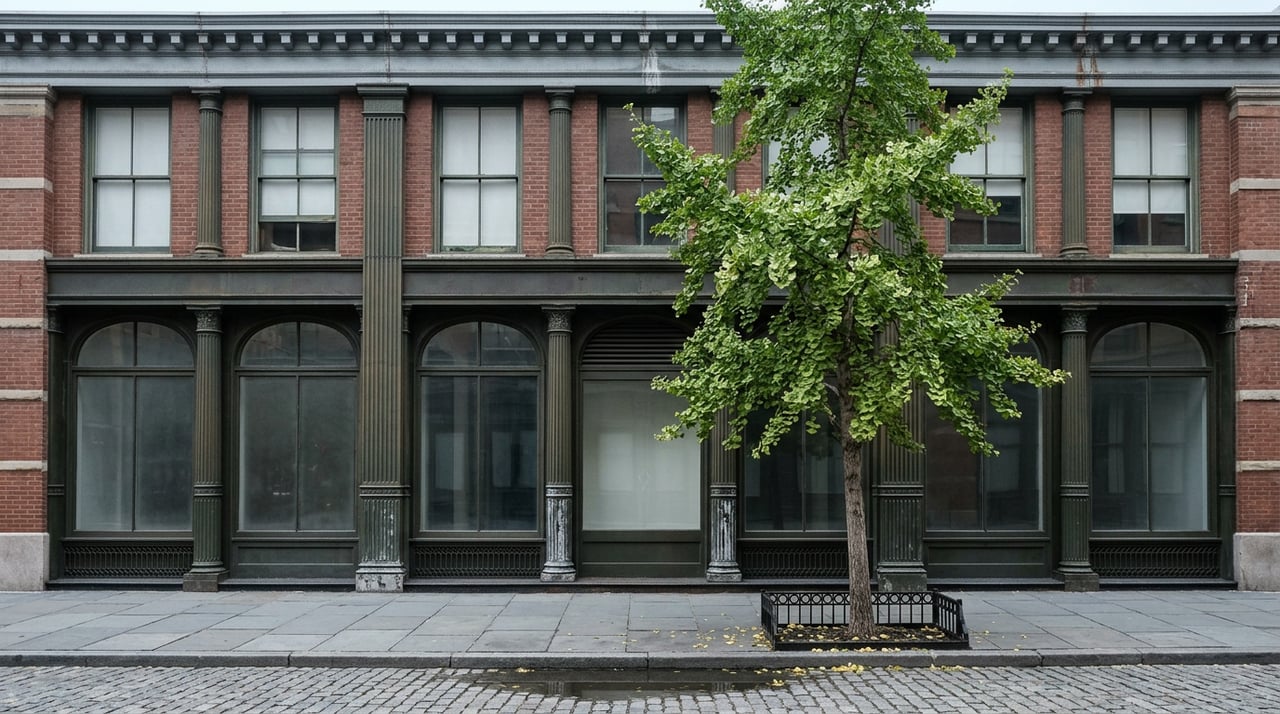
SoHo's residential story started as a workaround. The neighborhood's cast-iron buildings were zoned for manufacturing, and when artists began living illegally in the loft spaces they used as studios, the city responded in 1971 with a zoning amendment permitting Joint Living-Work Quarters for Artists. The provision let roughly 200 lofts convert to legal residential use on one condition: a certified artist had to occupy the unit. Those buildings still sit in M1-5A and M1-5B manufacturing districts today, and the requirement remains on the books.
The city's Department of Cultural Affairs still runs the certification process, and its published guidance is direct on the point: state legislation and the city's own zoning resolution require artist certification for anyone occupying joint living-working space in these districts. Applicants submit proof of training, exhibitions, or an active professional practice, and the review looks at artistic activity rather than income.
For decades, enforcement was light enough that most residents never gave it a second thought. Reporting on the law has long noted a different pattern underneath the calm surface: the Department of Buildings has at times grown stricter about renewing temporary certificates of occupancy in these buildings without a certified artist in every unit, and non-certified owners can face added scrutiny when they file for a refinance or a renovation permit. The zoning itself has not changed since 1971. How closely its paperwork gets checked has.
Nobody is being evicted for lacking an artist certificate. Real estate attorneys who work in the neighborhood have said for years that eviction was never the real risk. The risk sits in three quieter places: financing, board standing, and resale timing.
Lenders reviewing a unit without a standard residential certificate of occupancy may ask for additional documentation before approving a mortgage, and some decline to finance the deal at all. A co-op's proprietary lease can technically put a shareholder in default if the building's artist quota falls short, which becomes a live issue during board transitions rather than during any city inspection. And a buyer's own resale, years later, inherits the same questions the current owner is trying to avoid.
None of this makes a SoHo loft a bad purchase. It makes the building's zoning history a due-diligence item with real financial weight, on par with reviewing the offering plan or the board's financials, not a historical footnote.
Here is where the zoning question connects directly to the number every buyer starts with: the neighborhood's median price.
PropertyShark's SoHo market data shows how unstable that median can be from one month to the next. In March 2026, the reported condo median in SoHo stood near $5.2 million against a co-op median near $3.8 million. One month later, in April 2026, the condo median had jumped to $7.9 million, up 49.2 percent year over year, while the co-op median had fallen to $2.7 million. The entire April reading was built on just 17 closed sales across the neighborhood.
| Metric | March 2026 | April 2026 |
|---|---|---|
| Condo median sale price | ~$5.2M | $7.9M |
| Co-op median sale price | ~$3.8M | $2.7M |
| Median price per square foot | ~$2,139 | $2,313 |
| Total closed sales | not specified | 17 |
A swing that size is not a market correction. It is what happens when a handful of transactions, split between two ownership structures with very different buyer pools, decide the whole neighborhood's headline number. Condos in SoHo are disproportionately newer conversions with clean residential certificates of occupancy. Co-ops are disproportionately the older cast-iron buildings, including the ones still carrying Artist-in-Residence history. When the month's closings skew toward one group or the other, the median moves for reasons that have nothing to do with the neighborhood getting more or less valuable. It moves because the mix of what sold, and how easily each unit could be financed, changed.
Redfin's data points to the same underlying softness from a different angle. Over the three months ending April 2026, SoHo homes sold for a median of $3.2 million, down 16.9 percent from the same period a year earlier, and average time on market had grown to 106 days from 63 days the year before. Slower sales and wider price swings tend to travel together in a small, thin market like this one, and a zoning overhang that narrows the buyer pool for a subset of listings is a reasonable part of that explanation.
Picture two SoHo lofts listed at the same price per square foot. One is a condo conversion with a standard residential certificate of occupancy. The other is a co-op in a building that still references Joint Living-Work Quarters zoning in its filings. On paper, through a portal search, they look interchangeable.
In practice, the condo buyer walks into a conventional mortgage process. The co-op buyer may need a lender comfortable underwriting a building without a standard residential certificate, and should expect the board's proprietary lease and recent minutes to matter as much as the unit's finishes. If a renovation is part of the plan, SoHo's landmark status adds another layer: any change visible from the street inside the Cast Iron Historic District needs Landmarks Preservation Commission approval, and many boards in these older buildings also enforce wet-over-dry placement rules that limit where a kitchen or bathroom can move. None of that shows up in a price-per-square-foot comparison, and all of it affects how long you will own the loft before you can sell it without the same friction the current owner is managing.
A price per square foot tells you what the last buyer paid. It does not tell you what the building will let you do with the financing that requires. Before making an offer on a SoHo loft, work through this in order:
Doing this before contract, rather than during attorney review, is the difference between negotiating from information and discovering a financing problem after you have already committed emotionally to the space.
Does every SoHo loft require a certified artist to live there? No. The requirement applies only to buildings still zoned M1-5A or M1-5B under the Joint Living-Work Quarters for Artists provision, and even within those buildings many current residents are not certified artists. The exposure is not that you will be asked to leave. It is that the building's paperwork can complicate financing, board standing, and eventual resale.
Will this stop me from getting a mortgage? Not automatically, but it can add steps. Lenders may request extra documentation for a unit without a standard residential certificate of occupancy, and some prefer not to finance these buildings at all. Confirming lender comfort with the specific address before you bid avoids a surprise during underwriting.
Is the city planning to change this zoning? There have been discussions about updating SoHo and NoHo zoning to allow more housing, but as of 2026 no change has passed, and any revision would still need to move through community review. Buyers should underwrite the rules as they stand today rather than a future rewrite that has not happened yet.
SoHo's price tag will keep telling a slightly different story every month, because a market this small is always one or two closings away from a new median. The zoning history sitting inside a specific building's paperwork is the part of the story that does not change with the calendar, and it is the part most worth understanding before you are the one trying to sell. If you are weighing a SoHo purchase against other downtown neighborhoods, or you own a loft here and want a clear read on how its zoning history affects your exit, Alva Property Advisors can walk through the building-specific details with you. Schedule a Confidential Consultation to start with the numbers that actually apply to your address.
Stay up to date on the latest real estate trends.

At Alva Property Advisors, we're building a team of driven real estate professionals who are passionate about delivering exceptional results. Join our New York-based team and gain access to industry-leading support, innovative marketing, and opportunities for long-term growth.

THE ALVA PROPERTY ADVISORS TEAM
654 Madison Ave 5th Fl
New York NY 10065